


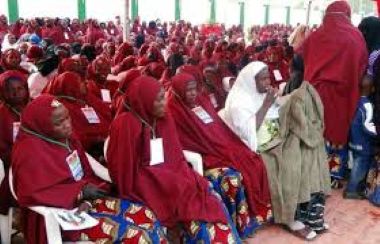
Zamfara state government recently free-wedded hundreds of couples of low-income extraction (Widows and Orphans as reported) as part of their policy on social and family development.
Kano state is also set to wed 3000 low-income vulnerable couples for similar reasons or assumptions: keep them away from social vices, raise responsible families and contribute to the development of their state.
But these programmes, whatever their intended good intentions and welfare considerations, with Billions of naira of taxpayers’ money expenditures, have serious developmental consequences on education, health, water, sanitation, housing, food, economic productivity, job creation and of course, the elephant in the room – security of lives and properties!!
Northern Nigeria currently faces some of the world’s most challenging development indices, characterized by high fertility rates, low educational attainment, fragile housing, water, sanitation and healthcare systems, as well as crippling insecurity. While state-sponsored mass weddings are often framed as social welfare interventions for the poor, they frequently represent a misallocation of critical resources. From a development perspective, these ceremonies act as a catalyst for immediate population surges that the region’s overstretched health, education, housing, water and security infrastructure are ill-equipped to handle.
The ONE-OFFs and the RECURRENT/CONTINUOUS responsibilities of Mass Weddings in the North
The ONE-OFFs – Usually taken care of by the government.
1. Bride Price.
2. Furniture.
3. Clothing/Uniforms.
4. A month or 2 food stock/supplies.
5. Pre-marital HIV test.
6. Pre-marital Sickle cell screening.
7. Probably Psychological support and Counselling.
The RECURRENT/CONTINUOUS responsibilities. Usually not factored in by the sponsoring governments.
1. Post-marriage counselling.
2. Family/Marriage viability monitoring and performance tracking.
3. Housing.
4. Water and sanitation needs.
5. Skills development, jobs and employability.
6. Birth rates.
7. Primary Health Care needs/Infrastructure.
8. Maternal and Child Health.
9. Education/School Enrolment.
10. Divorce rates.
11. Domestic violence. etc, etc.
State governments are diverting billions of naira toward temporary wedding ceremonies instead of addressing structural socio-economic challenges. Kano and Zamfara states allocated billions for quarterly mass weddings in 2025/2026 while facing pressing needs in education, healthcare, and job creation. Critics argue this represents a misplaced priority that offers short-term political optics rather than sustainable development.
The mass wedding programs fail to address post-marriage socioeconomic realities: couples face joblessness, housing shortages, and daily survival struggles without skills, education, or vocational opportunities. Rather than breaking poverty cycles, mass weddings tend to reinforce the idea that marriage is the only viable pathway for vulnerable girls/youth, even when unprepared, potentially worsening financial burdens as children add to family costs.
State-sponsored mass marriages also encourage population expansion without addressing family economic empowerment or demographic challenges. Northern Nigeria already grapples with rapid population growth and accelerating marriage rates, and without commensurate infrastructure exacerbates the strain on schools, healthcare, water, and housing systems. A poorly educated, poverty-stricken population is less likely to care for their offspring, perpetuating vicious poverty circles.
Without skills and functional education, or prospects, youth are easily recruited into kidnapping gangs, robbery networks, bandits and terrorist groups. Some drift to the Southern parts of the country for menial jobs, risking harassment, discrimination, ethnic profiling, and often constituting social menaces and security risks in big cities. The programs fail to tackle the root causes of instability while potentially boosting population growth that political leaders appear to prioritize over addressing globally embarrassing problems like poverty, poor health and undereducation.
With Northern Nigeria’s development landscape already at a breaking point, lets breakdown just two of the many divergent consequences of these MASS WEDDINGS across the North: HEALTH AND EDUCATION.
HEALTH will be HIT hard first by the first year of the Mass Weddings and then EDUCATION in 5-6 years (School Age).
Projected burden on healthcare delivery and infrastructure
Fertility: The Total Fertility Rate (TFR) in Northern Nigeria is as high as 7.3 children per woman, significantly higher than the national average.
Mass weddings inevitably lead to an immediate wave of pregnancies. Research indicates that such unions are more likely to have children sooner and more frequently, resulting in a 17% to 26% increase in lifetime fertility.
Maternal and Neonatal Health Demands
Maternal mortality; In the North West and North East, maternal mortality can reach 1,000 per 100,000 live births, often due to complications like obstetrics hemorrhage, obstructed labor and obstetric sepsis.
Within the next 6 years, the cohorts from these weddings will require:
Antenatal Care (ANC): A massive increase in demand for ANC services in regions where current utilization is often below 30%.
Skilled Birth Attendance: A surge in facility-based deliveries. Currently, only 7.6% of women in the North West deliver in health facilities.
Emergency Obstetric Care: A proportional rise in cases of obstetric emergencies, including gynaecological conditions like fistula (VVF/RVF), which already sees 12,000 new cases annually in Nigeria.
Immunization and Child Health
By year two, the surge in infants will place an unprecedented load on the Primary Health Care (PHC) system for:
Routine immunization (RI) schedules
Treatment for childhood illnesses such as malaria, pneumonia, measles, meningitis, diarrhoea, and malnutrition.
Nutrition interventions to combat stunting, which is already prevalent in the North.
Projected burden on education service delivery and infrastructure
While the impact on education is less immediate than health, it is equally profound. Within 6 years, the children born to these couples will be ready to enter the primary school system.
Classroom Deficits: The existing Northern Nigeria’s education infrastructure had already failed to accommodate millions of Almajiris and out-of-school children. Education access is already a huge challenge in the North. Adding a concentrated cohort of new students will worsen the pupil-to-classroom ratio if not well planned.
Teacher Shortages: Nigeria already faces a severe shortage of qualified teachers, especially in rural Northern communities.
Schools’ Safety and Security: Northern Nigeria had been plagued with devastating school raids and student abductions by terrorists over the entire last decade, with unquantifiable loss of lives, families and the future of those affected.
Case Scenario: Impact of a 3,000-Couple Mass Wedding.
To illustrate the infrastructure demand, we assume a single mass wedding event involving 3,000 couples in a typical Northern State.
Informed Assumptions.
● Fertility Rate: 7.3 children per woman (Regional TFR).
● Immediate Impact: 80% of couples will have at least one child within the first 24 months.
● 6-Year Projection: Average of 2.5 children per couple within the first 6 years.
● Standard Pupil-Teacher Ratio: 1:40 (National Target).
Projected Responsibility and Resource Requirements Table for 3,000 Couples
| Responsibility | Projected Needs for 3,000 Couples | Calculation Forecasts/Policies/Regulations |
|---|---|---|
| HEALTH FORECAST | ||
| Additional Births | 7,500 children | Based on the Total Fertility Rate (TFR) and increased fertility associated with social status. |
| Skilled Delivery Capacity at PHCs | 7,500 facility slots | Transitioning from 90% home deliveries to safe facility-based care. |
| Health Essentials | 37,500 vaccine doses | Minimum routine immunisation (RI) series for 7,500 infants. |
| Additional Primary Healthcare Workers | 150 PHC workers | Standard PHC personnel-to-population ratio. |
| EDUCATION FORECAST | ||
| Additional Classrooms | 188 classrooms | To accommodate 7,500 children at age six (40 pupils per classroom). |
| Additional Teachers | 188 qualified teachers | To maintain a teacher-pupil ratio of 1:40. |
| Additional Furniture | 7,500 furniture units | Minimum requirement for 7,500 learners. |
| Teaching and Learning Materials (TLMs) | 150,000 TLMs | Based on minimum National Policy requirements. |
| Digital Literacy | Digital literacy infrastructure for 7,500 learners | Minimum requirements under the National Digital Literacy Policy, National Education Data Infrastructure (NEDI) Initiative 2026, and Revised National Curriculum by NERDC (2026). |
| Almajiri/Tsangaya/Makarantar Allo Education | 100+ alternative schools and related infrastructure | National Policy on Enhancement of Almajiri Education and Its Implementation Guidelines; National Policy on Alternate Education Pathways; National Policy on Non-State Schools; National Skills Qualification Framework (NSQF) (all 2026). |
| TVET/Skills Acquisition | 75–100 skills hubs/centres | National TVET Policy and Functional Education Policy 2026; Revised Curriculum by NERDC (2026). |
| Toilets, Water and Sanitation (WASH) | 750 WASH facility units | Based on minimum National Policy requirements. |
| School Feeding | 7,500 free, nutritious meals per day | National Home-Grown School Feeding Programme/Policy; UBEC Act 2004. |
| School Safety and Security | 200–300 safety and security personnel, gadgets and infrastructure | National Policy on Safety, Security and Violence-Free Schools (2021). |
Conclusion
The billions spent on mass wedding ceremonies in Nigeria represent “missed opportunities” for sustainable development. If the same funds were allocated to reforming the Almajiri/Tsangaya systems of education, improving girls’ education and primary healthcare services, Nigeria could save an estimated $2.3 billion in budget expenditures by 2030 through improved infrastructure, human capital development and productivity.
Some Recommendations:
1. Shift Funding: States should redirect mass wedding budgets toward expansion of Primary Healthcare Facilities (PHCs) and services, Universal Basic Education (UBE) and Almajiri/Tsangaya and OOSC education reforms.
2. Incentivize Education: Replace wedding sponsorships with scholarships for students/youths, particularly girls in Northern Nigeria.
3. Infrastructure Strengthening: Strengthen Health and Education governance and quality assurance, increase PHC and Basic education Budgets and prioritize the recruitment and training of female teachers and skilled birth attendants (midwives) to improve education and health quality and service uptake as well as delivery in Northern Nigeria.
Dr. Balarabe Shehu Kakale is the Wwkilin Makaranta Daular Usmaniyya and Barden Tsangayu da Makarantun Allon Hausa
19th June 2026.
