


Nigeria is one of the most religious nations on earth. Mosques summon the faithful to prayer. Churches fill auditoriums, stadiums and vast prayer grounds. Religious language permeates politics, education, commerce and daily life.
Faith influences public conduct and private choices alike. Yet amidst this extraordinary religiosity lies a troubling paradox: one of Africa’s most religious societies continues to grapple with insecurity, extremism, intolerance, social fragmentation and the exploitation of vulnerable populations. This contradiction demands honest reflection.
The issue is not religion itself. Religion remains a source of moral guidance, charity, community support and personal transformation for millions of Nigerians. The more difficult question is whether we have adequately distinguished between religious freedom and religious accountability.
A democratic society must protect the right of every citizen to worship freely. Freedom of conscience and religion are fundamental constitutional guarantees. However, no liberty exists in complete isolation from public responsibility. Every freedom carries obligations designed to protect the rights, safety and welfare of others.
History provides sobering lessons.
In the late 1970s and early 1980s, Mohammed Marwa, popularly known as Maitatsine, emerged as a charismatic preacher whose influence spread rapidly among disaffected populations in Northern Nigeria. What initially appeared to be an eccentric religious movement eventually exploded into one of the deadliest episodes of sectarian violence in post-independence Nigeria. Thousands lost their lives and entire communities were destabilized before the state responded decisively.
Years later, another preacher, Mohammed Yusuf, established what many initially perceived as a religious and educational movement in Borno State. The movement attracted followers frustrated by poverty, corruption, unemployment and social exclusion. Before long, it evolved into Boko Haram, an insurgency that has consumed countless lives, displaced millions and inflicted immeasurable suffering upon the nation.
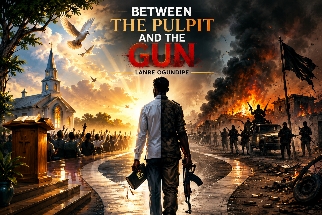
Neither Maitatsine nor Boko Haram emerged overnight. Every insurgency begins as an idea before it becomes an army. Every extremist movement begins with words before it reaches for weapons. Long before the gunshot comes the sermon; long before the bomb comes the doctrine. Nations that fail to understand this progression often discover the danger only after the pulpit has given way to the gun.
The lesson is neither anti-Islamic nor anti-Christian. It is a warning that extremism rarely arrives fully formed. It often grows quietly through unchecked narratives, charismatic authority, social grievances and institutional neglect.
The challenge extends beyond violent extremism.
Across Nigeria today, religious activity occupies a vast public space with varying degrees of accountability. Thousands of worship centres emerge annually. New pastors, prophets, evangelists and imams appear regularly. Many provide genuine spiritual guidance and social services. Others exploit ignorance, manipulate emotions, spread conspiracy theories and enrich themselves through the vulnerabilities of their followers.
This reality raises legitimate questions about oversight, accountability and public responsibility.
Religious schools present another dimension of the debate. Faith-based education has historically contributed significantly to literacy, moral formation and nation-building. Yet concerns remain regarding standards, child welfare, curriculum quality and the potential misuse of educational spaces for ideological indoctrination. The objective should not be to suppress religious education but to ensure that institutions entrusted with children meet minimum standards consistent with constitutional values and public safety.
Another issue that deserves mature discussion is noise pollution. Across many Nigerian communities, tensions continue to rise over excessive amplification from places of worship. The right to worship is fundamental. So too is the right of citizens to rest, study, sleep and enjoy their environment. A civilized society must be capable of balancing both rights without descending into hostility or intolerance.
Equally troubling is the growing prevalence of inflammatory preaching.
Throughout history, violence has often been preceded by rhetoric. Sermons that demonize other faiths, ridicule opposing beliefs or encourage hostility weaken national cohesion and create fertile ground for conflict. Freedom of expression should never become a shield for incitement.
Then there is the question of politics. Religion and politics have become deeply intertwined in Nigeria. Politicians routinely seek religious endorsements, while some clerics increasingly function as political actors. In certain instances, legitimate scrutiny of public conduct is portrayed as an attack on faith itself. This convergence weakens both democratic accountability and religious integrity.
The challenge before Nigeria is therefore not how to regulate religion. Government has no business determining doctrine, interpreting scripture or licensing salvation. A secular democracy cannot regulate belief.
What government can and must regulate are the public consequences of conduct where they intersect with security, education, child welfare, environmental standards, financial crimes and incitement to violence. Religious freedom must remain inviolable, but it cannot become a sanctuary for impunity.
Nigeria’s future stability may depend upon recognizing this distinction.
The shadows of Maitatsine and Boko Haram continue to remind us that difficult conversations postponed often return as national crises. Faith remains one of Nigeria’s greatest assets. Yet like every powerful social force, it must operate within a framework of responsibility, accountability and respect for the common good.
The debate is no longer whether religious freedom should be protected. It must be.
The more urgent question is whether religious freedom can continue to flourish sustainably without corresponding accountability. That is a conversation Nigeria can no longer postpone.
Lanre Ogundipe, Public Affairs Analyst, former President Nigeria and Africa Union of Journalists writes from Abuja.
