


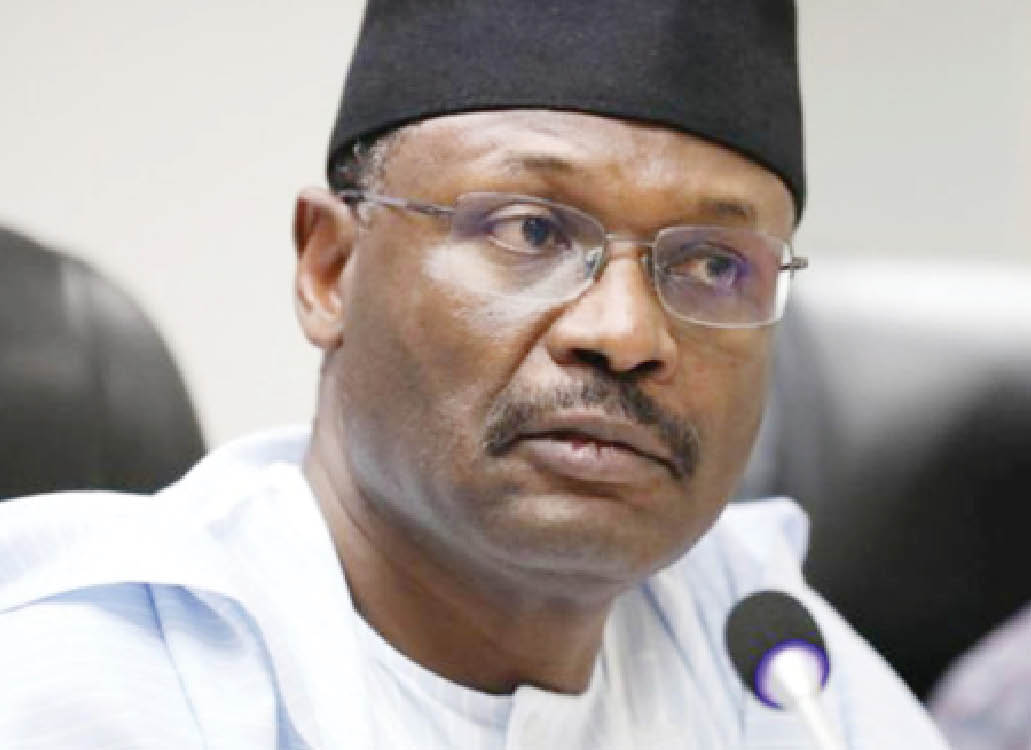
The uproar began the moment news broke that President Bola Ahmed Tinubu had finally released the long-awaited list of ambassadorial nominees, and among the prominent names sat that of Prof. Mahmood Yakubu, the immediate past Chairman of INEC. As expected, the dust rose quickly and almost uniformly; critics found a familiar rhythm in their outrage. To many observers, the appointment was “too soon, too close and too damaging,” a gesture they read as political reciprocity rather than national interest. The public sentiment leaned heavily toward moral discomfort, and in the marketplace of opinions, morality often wears the loudest colours.
Across various media platforms, the criticisms converged around one core suspicion: that rewarding the man who supervised the election that produced the current President undermines public trust. Engineer Y.Y. Sani of the ADP even insisted that Prof. Yakubu should decline the appointment to protect not only his reputation but the very soul of electoral neutrality. From the PDP to the ADC and a chorus of public commentators, the message echoed with remarkable similarity; Nigeria’s global image, electoral integrity, and INEC’s independence were all at stake. Some argued that national interest had been eclipsed by political sentimentality, while others declared the appointment a “scandalous return to patronage.”
This is where human psychology begins to overshadow political discourse. As scholars like George Gerbner remind us, “Perception is not merely the truth we see, but the truth we feel compelled to believe.” And indeed, what accompanies bad optics is always a seductive narrative, one that craves a villain, a motive, a revelation. Many seized on Yakubu’s nomination as proof of long-held suspicions about the 2023 elections. Suddenly, speculation hardened into “truth,” whispers transformed into “evidence,” and allegations became “confirmation.” Some even allege with confidence that they simply want Prof. Yakubu sent far away from his perceived enemies, driven by a lingering fear of the unknown.
Yet I struggled to swallow these narratives whole. Criticism is fair, but convenient storytelling is not. Someone online described Yakubu as “crafty, ambitious, one who bought his way in, failed the nation, and is now being paid back.” The comment was wrapped in confidence, but not in proof. And so, I intervened, not to defend the appointment, which I still believe suffers from terrible optics, but to call for balance.
I reminded them that from the available political signs, no other candidate stood a realistic chance in 2023 except Tinubu. Many who now speak with retrospective righteousness voted for him rather than Atiku. The PDP was fractured, the Peter Obi wave consumed much of its base, and the opposition cannibalized itself in real time. But as emotions rose, logic quietly exited the room, and narratives began to mutate into folklore.
One critic shot back, arguing that while he also voted for Tinubu, the issue was strictly moral. He insisted Prof. Yakubu was “least qualified to replace Jega,” had “no reputation to protect,” and had dragged INEC back to the era of Prof. Iwu. And, he compared the situation to global military failures in asymmetric warfare, concluding that while Buratai had challenges in fighting the insurgency to deserve his ambassadorial appointment by former president Buhari, Prof. Yakubu had none.
So, I clarified. I never compared the morality of Buratai’s appointment to Yakubu’s; I pointed to the pattern, the Nigerian political habit of recycling familiar faces out of comfort, connection, or emotional attachment. It is the same soft spot that made Buhari retain Emefiele for two terms despite unimpressive performance. It is the same emotional logic that made Dankaka almost glide back into office at the Federal Character Commission (FCC) despite overwhelming public resistance. It is the same phenomenon that shapes many political decisions: shared experience creates invisible loyalty.
This is not to justify it, only to acknowledge it as part of our political culture. Even in the judiciary, lawyers whisper privately that the judge you know and see daily stands differently in your subconscious than the stranger whose case lands before you. Human beings are wired to respond to familiarity. As Jonathan Haidt argued in The Righteous Mind, “We feel before we think, and we justify after the feeling.” Government actors are no exception.
But the narrative that Prof. Yakubu had “no reputation to protect” simply collapses under scrutiny. Nigerians suffer from selective memory. In 2011, after Goodluck Jonathan won, the North was awash with jokes mocking Jega: “Nigeria Jega-jega”, accusing him of betrayal. Yet by 2015, when Buhari won, the same Jega became a saint in that region, while Jonathan’s supporters suddenly saw him as biased. So, who gave Jega his so-called reputation, those who praised him in 2015 or those who insulted him in 2011? Reputation in Nigeria is not a stable currency; it fluctuates with political convenience.
And if Prof. Yakubu supposedly had “nothing to protect,” how does one explain a profile that includes a historic first-class degree, global scholarships, a doctorate from Oxford at 29, a professorship, years of teaching at the Nigerian Defence Academy, leadership of TETFund, roles in presidential committees, and multiple honorary recognitions? To argue that such a man has “no name to protect” is to redefine the concept of reputation to suit anger.
But perhaps what unsettles people most is not Yakubu’s competence but the symbolism of the appointment, the way it feels like Tinubu smiling too warmly at someone the public believes he should keep at arm’s length. Symbolism, not fact, shapes public outrage. And symbolism is powerful; it can turn an innocent smile into a suspected affair. A divorced woman may smile at Tinubu, and a gossiping crowd will already be composing the scandal in their minds. That is how perception works. It turns shadows into certainty when emotions are strong.
In truth, the Yakubu appointment is politically careless, socially insensitive, and damaging to public perception. It feeds suspicion, strengthens allegations, and deepens existing distrust. But perception, no matter how loud, does not automatically graduate into truth. Court rulings upheld the election, and if we discard judicial verdicts whenever they contradict our emotions, then we are no longer a democracy but a chorus conducted by personal sentiment.
Nigeria’s problem has always been the ease with which we elevate perception to the level of scripture. Optics matter, yes, but optics are not evidence. And in the absence of proof, suspicion alone cannot convict a man, just as seeing a woman smile at Tinubu cannot prove adultery, especially when she is already divorced and owes nobody loyalty.
In the end, perhaps the real tragedy is that our political culture has so eroded public trust that even ordinary gestures are interpreted as conspiracies. Until institutions regain their credibility, every smile will look like a secret, every appointment like a reward, and every political gesture like a betrayal. And until then, even when Tinubu smiles innocently with another man’s wife, the public will still insist they have caught them in the act. After all, Prof. Yakubu is like a divorcee who is now free, and any smile directed toward him does not necessarily imply a past affair, but simply the familiarity and access that naturally pave the way for such gestures.
Bagudu can be reached at bagudumohammed15197@gmail.com or on 0703 494 3575.
