


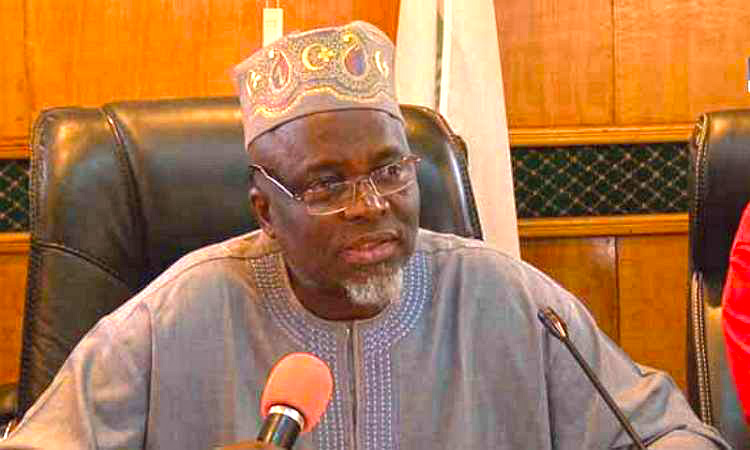
There are public officials who merely occupy offices, and there are those rare individuals whose character quietly transforms the offices they occupy. Professor Is-haq Olanrewaju Oloyede belongs to the latter category.
As he gradually bows out of public service after decades of distinguished contributions to academia, educational administration, interfaith engagement, and national development, it becomes necessary to reflect not merely on the offices he held, but on the values he carried into those offices—integrity, discipline, accountability, intellectual depth, humility, and an uncommon reverence for public trust.
In a nation often fatigued by stories of institutional decline and public cynicism, Oloyede’s journey offers a refreshing reminder that conscience remains one of the most powerful instruments of leadership.
My personal encounter with him dates back to the 2014 National Conference in Abuja. At one of the meetings convened around the Yoruba agenda, I openly challenged what I considered the growing tendency of a few self-appointed leaders to arrogate to themselves the collective mandate of the Yoruba people while appropriating slots and opportunities for their preferred associates and protégés. It was an uncomfortable intervention in a gathering where many preferred silence to confrontation.
After the session, Professor Oloyede quietly walked up to me, patted me on the back, and commended the courage it took to demand fairness and accountability from those who had assumed unquestioned authority.
That brief encounter left a lasting impression on me. From that point onward, I began to follow his trajectory more closely.
On one or two occasions afterwards, I sought his intervention concerning the future of one of my wards. His response revealed another side of the man.
“My namesake,” he said, “allow these children to grow. With or without us, they will live their lives. Allow him to choose what he wants. Our duty is not to control their future but to guide them aright.”
It was a simple statement, yet it carried profound wisdom.
What impressed me even more was that he later called to inquire about the outcome of the matter and expressed satisfaction that the child had been allowed to make an informed decision.
That was vintage Oloyede—firm in conviction, humane in counsel, and genuinely interested in outcomes beyond the moment.
Long before his emergence as Registrar of the Joint Admissions and Matriculation Board (JAMB), Professor Oloyede had already distinguished himself within Nigeria’s academic community.
As Vice-Chancellor of the University of Ilorin between 2007 and 2012, he presided over one of the most remarkable periods in the institution’s modern history. Under his leadership, the university strengthened its reputation for academic stability, administrative discipline, and institutional excellence, emerging as one of Nigeria’s most sought-after universities and gaining increased visibility within Africa’s higher education landscape.
His influence extended beyond the University of Ilorin. He served as President of the Association of African Universities, Chairman of the Committee of Vice-Chancellors of Nigerian Universities, member of international university bodies, Co-Secretary of the National Political Reform Conference, member of the 2014 National Conference, Executive Secretary of the Nigerian Inter-Religious Council (NIREC), and Secretary-General of the Nigerian Supreme Council for Islamic Affairs (NSCIA).
Yet it was at JAMB that his public profile assumed national prominence.
When he assumed office as Registrar in 2016, JAMB was largely perceived as just another examination body. Few anticipated the institutional transformation that would follow.
Through technological reforms, administrative restructuring, financial discipline, transparency measures, and operational efficiency, Oloyede fundamentally altered public perception of the institution. Under his stewardship, JAMB evolved from an agency historically associated with modest remittances into one that began contributing billions of naira to the Federal Government’s treasury while simultaneously improving service delivery.
What distinguished him was not merely the revenue figures, but the moral symbolism behind them.
For perhaps the first time in many years, Nigerians saw a public official openly demonstrate that government institutions could function without becoming theatres of waste, opacity, or entitlement.
President Bola Ahmed Tinubu once described him as an astute administrator, scholar, educator, and patriot whose reforms introduced transparency, credibility, and accountability into the admission process while transforming JAMB into a significant contributor to national revenue.
Yet, no tribute to Professor Oloyede would be complete without reference to one quality that sets him apart—his willingness to accept responsibility.
When technical glitches affected candidates during the 2025 Unified Tertiary Matriculation Examination, he publicly accepted responsibility and apologised, even becoming visibly emotional while addressing the nation. In a public environment where denial often comes easier than accountability, that moment revealed the conscience behind the office.
Religion may explain his spirituality, but it does not fully explain his conduct.
Beyond titles, positions, and affiliations, Professor Oloyede appears to wear conscience as a permanent badge.
Whether as scholar, administrator, Islamic leader, public servant, or mentor, he has consistently demonstrated an unusual fidelity to principle.
As an Imam and respected leader within Nigeria’s Islamic community, he has brought the same discipline, restraint, and moral seriousness that characterised his academic and public engagements. Those who have worked closely with him often speak less about his authority and more about his sense of duty.
Perhaps that is the greatest lesson his journey offers.
Institutions do not become credible merely because of laws, policies, or structures. They become credible when men and women of character choose to treat public trust as a sacred responsibility.
As Professor Is-haq Olanrewaju Oloyede steps into a new phase of life, one can only hope that Nigeria will continue to produce more public servants in his mould—individuals who understand that leadership is not the accumulation of power, but the disciplined management of responsibility.
In an age increasingly defined by noise, self-promotion, and institutional distrust, Oloyede’s legacy reminds us that quiet integrity still matters.
And perhaps that is why his story deserves to be told—not merely as the story of a former Vice-Chancellor, JAMB Registrar, scholar, or religious leader, but as the story of a man who proved that conscience can still survive in public life.
Lanre Ogundipe, former President of the Nigeria and Africa Union of Journalists, writes from Abuja.
