


The harmattan haze hung over Kano as the 2023 general elections approached, casting a pale veil across the ancient city’s minarets and crowded streets. Political tensions were rising, public anxiety was growing, and security agencies faced the difficult task of maintaining peace in one of Nigeria’s largest and most politically active states.
Beyond the electoral atmosphere, Kano was also confronting persistent street crime. Phone snatching, armed robbery and clashes involving groups of restless youths—popularly known as Yan Daba—had created fear in several communities.
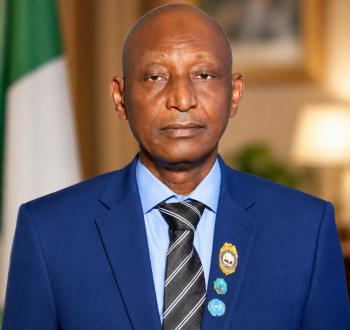
It was into this complex environment that Mohammed Usaini Gumel assumed office as Commissioner of Police, Kano State Command.
He arrived without unnecessary fanfare or exaggerated promises. What he brought instead was more than three decades of policing experience, a reputation for discipline and professionalism, and a firm belief that the primary purpose of the police uniform is to protect lives, preserve public peace and uphold the law with fairness.
By the end of his tenure in Kano, two expressions had become closely associated with his leadership: “He came, he saw, he acted,” and, perhaps more importantly, “He treated people with dignity.”
A Career Built on Service
Gumel’s policing career was shaped not merely in the corridors of Force Headquarters, but through service in different parts of Nigeria—from demanding field assignments and criminal investigations to strategic leadership responsibilities.
Long years in uniform can sometimes create distance between public officers and the people they serve. Gumel’s experience appeared to produce the opposite effect. He developed a leadership philosophy that recognised members of the public not as problems to be controlled, but as citizens entitled to protection, fairness and respect.
Colleagues from his earlier years in the Force Criminal Investigation Department remember him as an officer who devoted time to helping junior personnel understand the proper preparation of case files, charge sheets and evidential documentation. His concern was not simply administrative accuracy; it was the understanding that when an investigation is poorly handled and a case collapses in court, the victim suffers a second injustice.
As he rose through the ranks—from a young officer to Commissioner of Police, Assistant Inspector-General of Police and, ultimately, Deputy Inspector-General of Police—he retained his concern for the welfare and professional development of those around him.
Former aides and junior officers continued to seek his guidance long after serving under him. Their requests were not always related to policing. Some needed advice about family responsibilities, education, transfers or personal difficulties.
One former orderly described his leadership in simple terms:
“Oga Gumel did not care only about your rank; he cared about your burden. If you needed assistance, he gave what he could. If you needed guidance, he gave his time—and time is one of the rarest gifts in the Police Force.”
This human-centred approach explains the widespread goodwill that followed announcements of his promotion and eventual retirement. Messages of appreciation came not only from senior police officers and public officials, but also from traditional and religious leaders, journalists, traders, community representatives and young people whose lives had been affected by his interventions.
Confronting Kano’s Security Challenges
Kano is globally recognised for its centuries-old commercial heritage, rich culture and enormous political significance. However, when Gumel took charge of the state command, residents were increasingly troubled by street crime, particularly phone snatching.
Students, traders and commuters were frequently targeted by criminals who operated around busy roads, markets and densely populated neighbourhoods. Although arrests and patrols had been conducted over the years, the cycle of crime remained difficult to break.
Rather than immediately launching a highly publicised operation, Gumel began by studying the problem. He consulted officers, reviewed crime patterns and engaged residents, community leaders and other stakeholders in areas such as Dala, Fagge and Tarauni.
His conclusion reflected his broader understanding of modern policing: society cannot arrest its way out of every social problem. The police must decisively confront violence and criminality, but sustainable peace also requires prevention, community participation, youth engagement and rehabilitation.
This philosophy informed a security strategy built around three principal elements.
The first was intelligence-led enforcement directed at suspected organisers and repeat offenders, rather than indiscriminate arrests of young people. The second was the deployment of rapid-response teams to identified crime hotspots, accompanied by clear instructions on professionalism and the prohibition of extortion. The third—and perhaps the most innovative—was the creation of a structured opportunity for repentant youths to surrender, renounce violence and participate in rehabilitation programmes.
The command subsequently reported a significant reduction in phone-snatching incidents. At one point, Kano reportedly recorded 30 consecutive days without an officially documented case of phone snatching—an achievement widely celebrated by residents and the media.
For Gumel, however, improved security was not an extraordinary favour to the public. It was what responsible policing should ordinarily deliver.
Reclaiming Young People from Violence
One of the most enduring aspects of Gumel’s legacy in Kano was his engagement with the Yan Daba phenomenon.
For decades, unemployed and vulnerable youths had been recruited or manipulated by political and criminal interests, especially during elections and communal disputes. Once their usefulness ended, many were abandoned without education, employment or a credible path back into society. Some subsequently became involved in street crime and organised violence.
Gumel adopted an approach that combined firm law enforcement with rehabilitation. This did not amount to immunity for anyone accused of serious criminal offences. Rather, it created a structured process through which those willing to renounce violence could surrender, undergo profiling and counselling, and participate in skills-acquisition and empowerment programmes.
Working with the Kano State Government, community leaders and other stakeholders, hundreds of young people were reportedly encouraged to abandon violence. Participants were introduced to vocational opportunities in areas such as carpentry, tailoring, welding, small-scale agriculture and other lawful trades.
The process was neither perfect nor instantaneous. There were setbacks, public doubts and occasional relapses. Nevertheless, the intervention demonstrated that properly managed rehabilitation could reduce violence while restoring human dignity.
Some former gang members eventually became advocates for peace within their neighbourhoods. They organised sporting activities, assisted in resolving local disagreements and supported community efforts to protect vulnerable residents.
One beneficiary recalled that what changed his outlook was not merely the offer of assistance, but the fact that a senior police officer was willing to sit with him and ask what kind of future he wanted for his children. That question forced him to imagine a life beyond violence.
Today, many of the rehabilitated youths are husbands, fathers, artisans and community members earning legitimate livelihoods. Their transformation remains one of the most compelling testimonies to Gumel’s belief that policing must not only apprehend offenders but, where possible and lawful, help society prevent people from returning to crime.
The Test of the 2023 General Elections
If Kano’s street crime tested Gumel’s operational capacity, the 2023 general elections tested his impartiality and moral courage.
Kano entered the electoral season amid intense political rivalry. Accusations and counter-accusations circulated widely, while misinformation spread rapidly through social media. The traditional institution was also under pressure from unresolved political and legal tensions surrounding the reorganisation of the Kano Emirate.
Against this background, Gumel gave his officers a clear operational directive:
“Be neutral. Be visible. Be professional. When confronted by a crowd, de-escalate first.”
Although the elections were not entirely without incidents, Kano did not experience the widespread collapse of public order that many had feared. Police personnel maintained a visible presence while largely exercising restraint.
Observers and journalists also noted Gumel’s direct engagement with voters and communities. He visited polling areas, spoke with residents and repeatedly emphasised that the responsibility of the police was to protect the electoral process—not to determine its outcome.
When tensions rose after the declaration of results, he engaged traditional rulers, religious leaders, political actors and community representatives. His message was straightforward: Kano was greater than any individual, political party or institution. If violence prevailed, the state and its people would suffer; if peace was preserved, society would have the opportunity to grow.
His handling of tensions surrounding the Kano Emirate equally attracted attention. Without publicly aligning himself with any of the contending interests, he concentrated on protecting lives, preventing mob action and maintaining channels of communication. This cautious, non-partisan posture helped reduce the risk of confrontation during an exceptionally sensitive period.
Kindness as a Policing Strategy
Gumel’s public record cannot be assessed only through crime statistics, arrests or security operations. His leadership was also reflected in how he treated ordinary people.
At the Police Command Headquarters in Bompai, officers and visitors recount stories that rarely appear in official reports: a junior officer who received assistance when his daughter required urgent medical attention; the widow of a deceased policeman whose benefit documents were processed after a long delay; and a journalist who published a critical report about the command but was invited for constructive engagement rather than subjected to intimidation.
For Gumel, kindness was not separate from effective policing. It was central to it.
He frequently reminded officers that fear might compel temporary obedience, but only trust produces reliable cooperation. When citizens trust the police, they are more willing to report crimes, provide intelligence, preserve evidence and assist investigations. In that sense, humane treatment is not a sign of weakness; it is an operational asset.
Throughout his career, Gumel received commendation letters, awards for meritorious service and recognition from professional and community organisations. Yet one of the tributes reportedly closest to his heart came from a group of reformed youths. Their message was simple:
“Sir, because of you, we now have dreams. We are equally noble.”
Those words capture the deeper meaning of public service: not only maintaining order, but also restoring hope.
A Legacy Beyond the Uniform
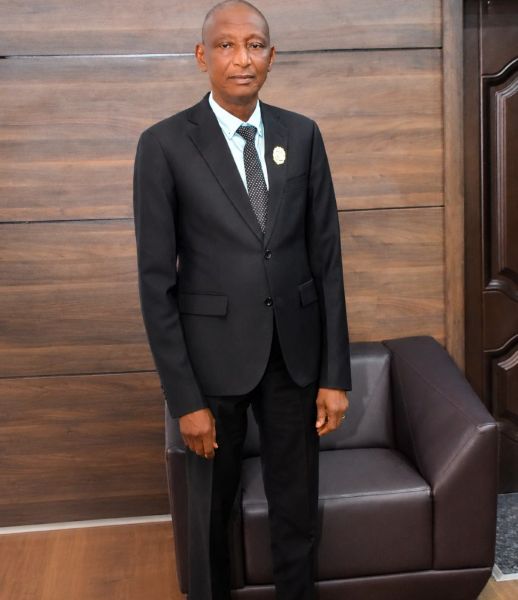
DIG Mohammed Usaini Gumel retired from the Nigeria Police Force in 2026 after more than three decades of service. He left the institution without unnecessary spectacle, but the responsibilities associated with his reputation did not end with retirement.
Young officers still seek his professional advice. Community leaders continue to invite him to mediate disputes. Security stakeholders consult him on policing, community engagement and institutional reform. Across the places where he served, his name continues to evoke stories of discipline, accessibility, fairness and compassion.
There are those who believe that his experience and connection with ordinary people could be valuable in elective or other forms of public leadership. They argue that his potential contribution would not be measured only by physical projects, but also by the lives he could help rebuild and the institutions he could strengthen.
Gumel himself would probably respond with characteristic restraint: he was a police officer whose duty was to preserve peace so that citizens, communities and governments could pursue development.
At a time when public service is too often judged by personal accumulation, DIG Mohammed Usaini Gumel is remembered for what he gave—his time, attention, experience, fairness and willingness to offer people a second chance.
He confronted Kano’s security challenges with courage and professionalism. Yet his greatest victories were achieved not by force alone, but through dialogue, trust, inclusion and the uncommon power of kindness.
That is why, from police barracks to marketplaces and communities across Nigeria, DIG Mohammed Usaini Gumel (Rtd) remains an enduring example of excellence, humane leadership and selfless service to humanity.
