


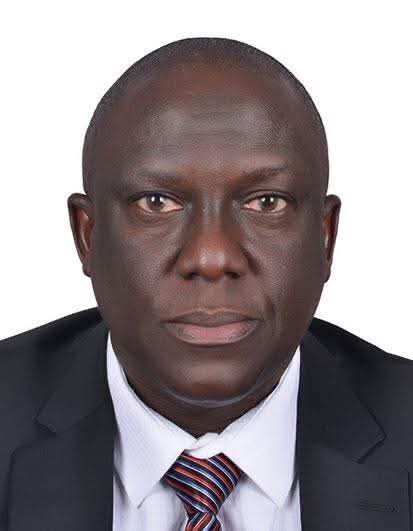
The House of Representatives has passed, for Third Reading, a Bill for an Act to criminalise the refusal of eligible voters to go out and vote at elections. The sponsor of the Bill was speaker Dr. Tajuddeen Abbas, Ph.D (Iyan Zazzau) himself.
Speaker Tajuddeen sponsored the Bill perhaps because he has noticed that the number of registered voters in Nigeria continues to rise, while several eligible voters who actually go out to vote have consistently been dwindling since the third election cycle in 2007.
According to INEC records, between 1999 and 2023, the number of those who voted at presidential elections shows that –
In 1999, 60% voted
In 2003, 67% voted
In 2007, 64% voted
In 2011, 63% voted
In 2015, 43% voted
In 2019, 40% voted
In 2023, 27% voted.
This is a serious cause for concern. But worse still, I believe, since the APC has succeeded in killing the PDP, if they thwart the efforts of the coalition, less than 27% of eligible voters would come out to vote in 2027. Time shall tell.
Low voter turnout has reasons. In this country, it may range from voter apathy to logistical challenges as the postponement of elections. It may also be for insecurity, which may, as events start showing, be even worse in 2027.
Even with these, it is certainly not tight for the government to criminalise the refusal by citizens to vote in elections.
There are a couple of countries where refusal to vote is criminal, though. But there are only 22 of them in the world today. Most are in South America and Asia. Only 3 are in Europe, and 2 -Egypt and Congo DRC- are in Africa, but Egypt and Congo DRC are countries with one or no party at all.
In this debate, there are 2 Sadiqs. Sadiq the politician and Sadiq the lawyer. As Sadiq the politician, it disturbs me a lot that the number of registered voters in Nigeria is increasing, of course due to the increase in our population, but the number of people who actually come out to vote is decreasing, and we need to do something about it. Here, I agree with Iyan Zazzau.
But as for Sadiq the lawyer, I cannot support making a law to criminalise refusal to vote. I also object to making a law that would put people in jail for 6 months and fine them N100,000/ for flouting it. Here I disagree with my friend, the Iya. I also object to passing this law because there is a legal impossibility in obeying it by citizens.
Therefore, the best solution is for the House to address the root causes of why people do not vote, which are very well known to all of us.
My objection to making this law is also hinged on the rights of citizens to do or not as they wish, based on the law. Thus, though the 1999 constitution did not expressly say in chapter 4 that the right to vote is a fundamental right in Nigeria, the Universal Declaration of Human Rights in Article 21 essentially states that –
“The will of the people shall be the basis of the authority of government; this will shall be expressed in periodic and genuine elections which shall be by universal and equal suffrage and shall be held by secret ballot or by equivalent free voting procedures.”
As a signatory to this international instrument, voting in Nigeria is a right. A citizen of this country cannot, therefore, be punished for refusing to exercise his right.
One could argue that election is a CIVIC DUTY, not a CIVIC RESPONSIBILITY, and therefore people MUST vote. But this is a false argument if one considers that in the USA, UK, France, Germany and in the majority of older democracies in the world, voting is a civic responsibility, not a civic duty, which is the same as in Nigeria.
As opposed to civic DUTY, in civic RESPONSIBILITY, citizens are only ENCOURAGED to vote as a measure of their contribution to their communities. Also general reading of our constitution will reveal that citizens cannot be legally required to vote. Therefore, trying to use the law to force people to vote could be unconstitutional.
The House of Representatives. knows how to make government officials accountable with a view to encouraging people to go out and vote, come rain, come shine. They have the power under the Constitution to do so. So this law is as unnecessary as it is undesirable.
Beside these said reasons, I cannot support the making of a law that cannot be obeyed by all citizens, where the poor can see the rich and powerful flouting the law with no consequence, while the poor become the ones who will always be punished for flouting the same law.
Again, the idea that laws should be obeyed implies that those laws are just and capable of being obeyed. A law cannot be obeyed if it is inherently unfair or impractical to enforce. This law would be an unfair law, it would be impractical to obey by the poor to obey since the rich would not be punished for disobeying it.
From experience, therefore and given the points made, it is safe to conclude that Dr. Tajudden Abbas (Iyan Zazzau) may have good intentions for proposing this law. He may be concerned, as I am, that we need to go out and vote. That bad leaders are elected by those who refuse to vote. But supporting this law is a NO for me because a law that will ask people to go to the polling unit by force is not just. This is because the idea that laws should be obeyed implies that the laws are just and capable of being obeyed. This law would also not be obeyed because it would be too difficult to enforce. There is therefore no need to waste resources and time in making it, as it will only damage the credibility of our law enforcement agents, as they will certainly look the other way if I refuse to vote. Besides, no judge with a conscience would convict a farmer who went to his farm on election day, or convict a herder who herded cattle in the bush in Fufore on election day. More so, punishment for violating the law (6 months jail term and N100,000/ fine) is too harsh and may apply only to the poor.
