


At the Yar’akija Primary Healthcare Centre in Sokoto metropolis, women sit patiently with their children, some clutching infants while others guide their older children through the busy clinic halls. For many, visiting a healthcare centre was once a rare or uncertain experience. Today, these visits are becoming a regular part of life, offering routine immunisations, advice on nutrition, and support for adolescent health. For these families, the change is small yet profound, a sign of hope and care reaching them closer to home.
This shift was highlighted during a high-level EU delegation visit, accompanied by UNICEF, UNFPA, the International Labour Organization (ILO), and development partners. The mission aimed to strengthen systems that support women, children, adolescents, and vulnerable families across Sokoto State.
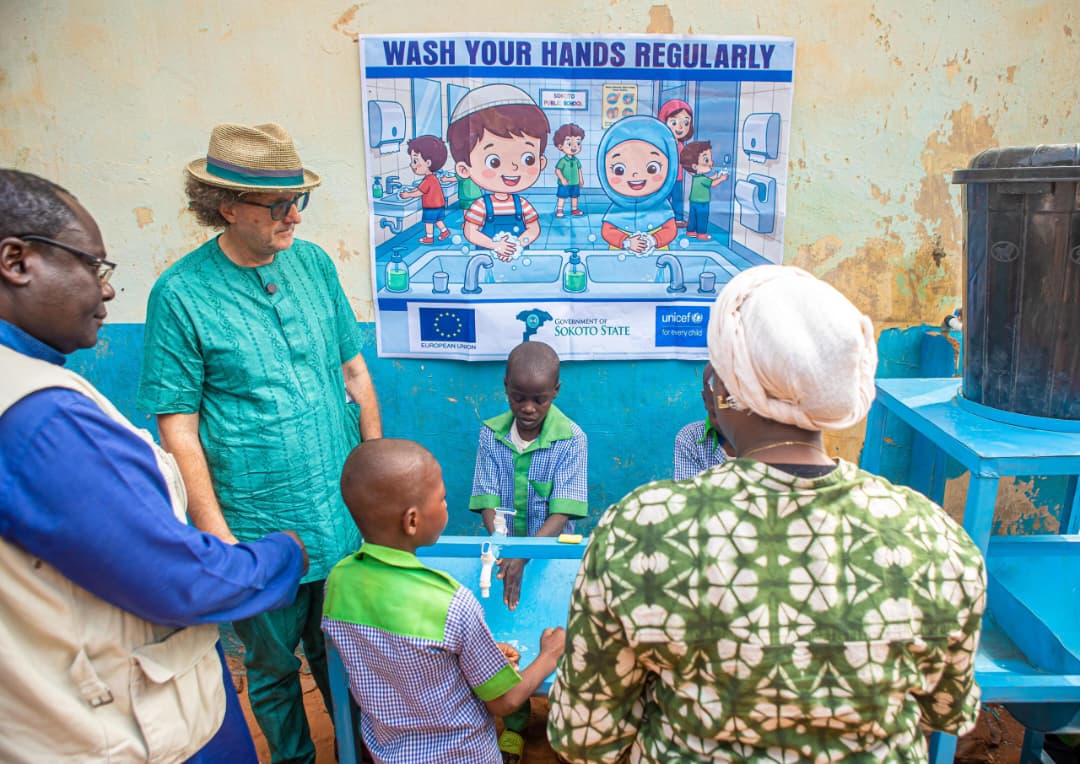
The delegation began their visit in Yabo Local Government Area, touring Makarantar Malam Kabiru Dangande Yabo, a school supported by the EU and UNICEF that provides young children access to early education. They also visited Sarkin Kabbin Yabo Model Primary School, where teachers spoke of safer learning environments and increased community involvement, while pupils shyly shared their hopes of staying in school. Partners noted that these improvements stem from investments in inclusive education and teacher support designed to ensure no child is left behind.
Healthcare facilities were next on the agenda, where frontline workers demonstrated how services are being made more adolescent-friendly and responsive to the needs of women and girls. For families who once travelled long distances for care, having services closer to home has made a critical difference.
The mission also visited IDP camps and community centres, seeing firsthand the impact of social protection initiatives. One such programme is the Supporting Sustainable Social Protection Systems in Nigeria (SUSI) initiative, funded by the EU. During the visit, partners introduced a new tool in the National Social Register designed to capture multiple dimensions of poverty, helping to identify families in need, including those without birth registration, out-of-school children, and households affected by malnutrition or limited healthcare access.
Community organisations also play a vital role. CARE Nigeria and Plan International Nigeria emphasized local leadership, accountability, and safe spaces where children, especially girls, can learn and grow. Partners such as the Danish Refugee Council and Action Against Hunger highlighted community-based solutions supporting displaced families and host communities through livelihoods, nutrition, and resilience-building initiatives.
The delegation met with Governor Ahmed Aliyu, who reaffirmed the state government’s commitment to delivering essential social services and improving the quality of life for residents. Massimo De Luca, Head of Cooperation at the EU Delegation to Nigeria, stressed that inclusive development requires strong institutions capable of responding to the real needs of communities.
UNICEF Deputy Representative (Programme), Rownak Khan, added that education, primary healthcare, adolescent services, and social protection are interconnected pillars that help families not only survive but thrive. The ILO also highlighted the importance of strong data, clear policies, and coordinated financing to ensure support reaches the most vulnerable efficiently.
Another milestone during the visit was the launch of a tree-planting initiative at Bini Village in Wamakko Local Government Area, aimed at promoting environmental protection and combating desertification.
As the mission concluded, one message resonated across all sites visited: development is most meaningful when it touches everyday lives. From classrooms and clinics to households striving to make ends meet, the renewed commitment by the EU, UN agencies, and partners signals continued support for Sokoto State’s journey toward inclusive and sustainable development, one family, one child, and one community at a time.
